 PARAMETRE
CGI and artificial intelligence: what we can do together, what stays separate

Since generative AI tools flooded conversations about visual production, a confusion has taken hold. Many brands ask us the same question: will AI replace CGI? The short answer is no. The longer answer deserves to be stated clearly, because the confusion between the two technologies costs time and sometimes leads to poor decisions for teams trying to optimise their image production.
CGI and AI do not produce the same thing
CGI, in the sense we use it, refers to the production of images from constructed and controlled 3D scenes. Every element of the image is modelled, positioned, lit and rendered according to parameters defined by humans. The result is predictable, reproducible and precisely modifiable. If a client asks to move a light source three degrees to the left, we do it. If a bottle's colour changes, we adjust the corresponding shader and re-render. Control is total at every stage.
Generative AI works differently. It produces images from text descriptions or reference images, interpolating from millions of examples it was trained on. The result can be visually convincing, but it is not built in a deterministic way. Asking a generative AI tool to reproduce exactly the same bottle with exactly the same lighting in ten slightly different variations rarely produces a consistent result. AI generates; it does not build.
What AI actually brings to our work
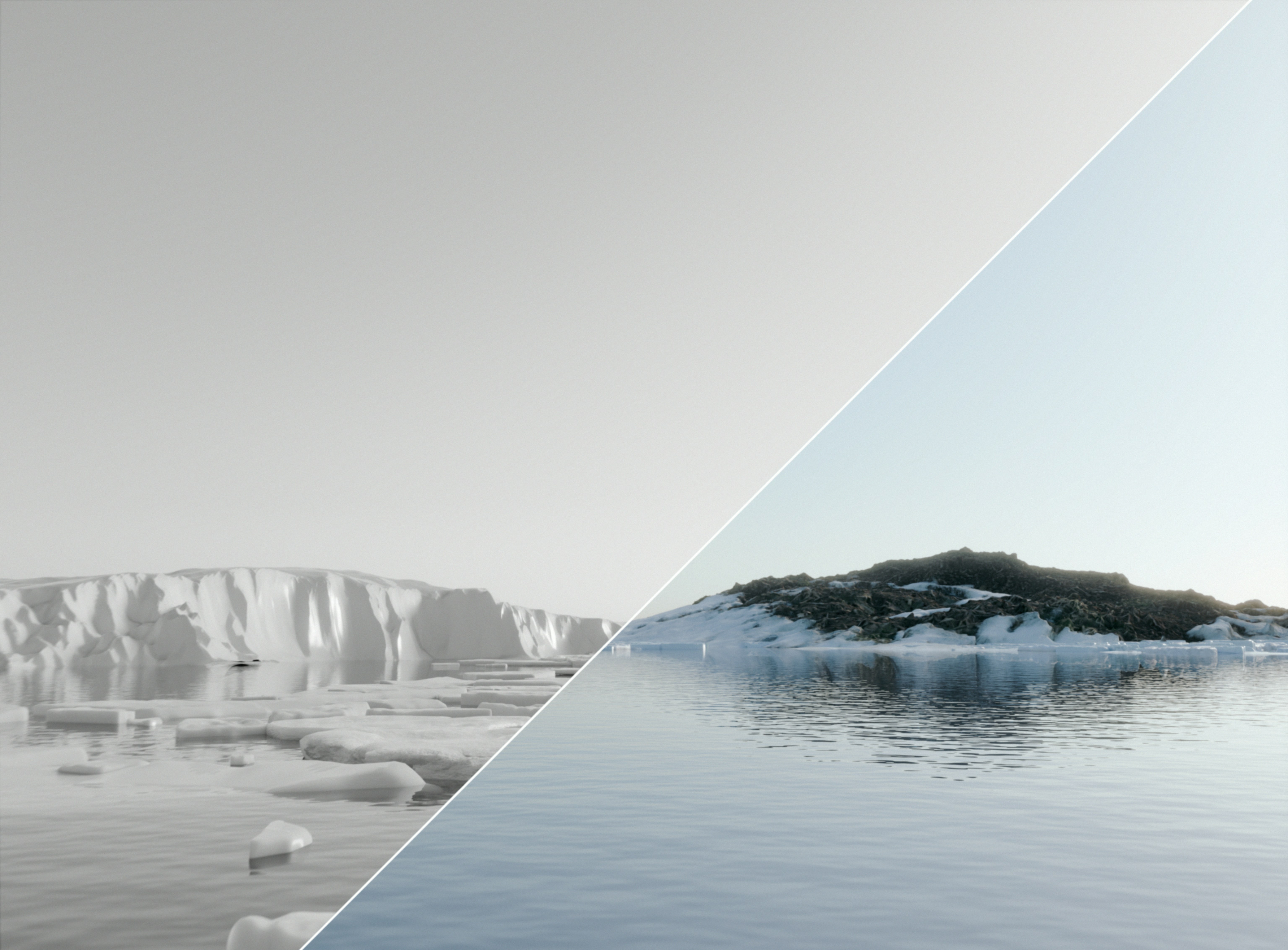
It would be a mistake to conclude that AI has no place in a serious visual production workflow. It does, but a different one from what is often attributed to it in mainstream debates. We use AI tools at several points in the process, not to replace 3D rendering, but to accelerate certain stages that do not require the same level of control.
Exploring creative directions is a good example. Before launching a full 3D production, it can be useful to quickly generate several atmospheres and visual universes to help a client clarify what they want. AI is very effective for this. It can produce inspirational images in minutes that give a direction, without committing the resources of a full production. It is a tool for conversation and exploration, not for final delivery.

Why AI cannot replace CGI for packshots
The main reason is simple: brands need consistency and control over their visual identity. A packshot is not simply an aesthetically pleasing image in the abstract. It is an image that must faithfully represent a specific product, with its exact proportions, particular materials and characteristic reflections. It must be consistent with the other visuals in the range, adaptable to dozens of different formats, and modifiable if the product or creative direction evolves.
No current generative AI tool reliably meets these constraints. Text hallucinations on labels, proportions that vary imperceptibly from one generation to the next, the impossibility of reproducing exactly the same result twice: these are not minor details. For a brand whose communication depends on product visuals, they are deal-breakers.
Our position on the subject
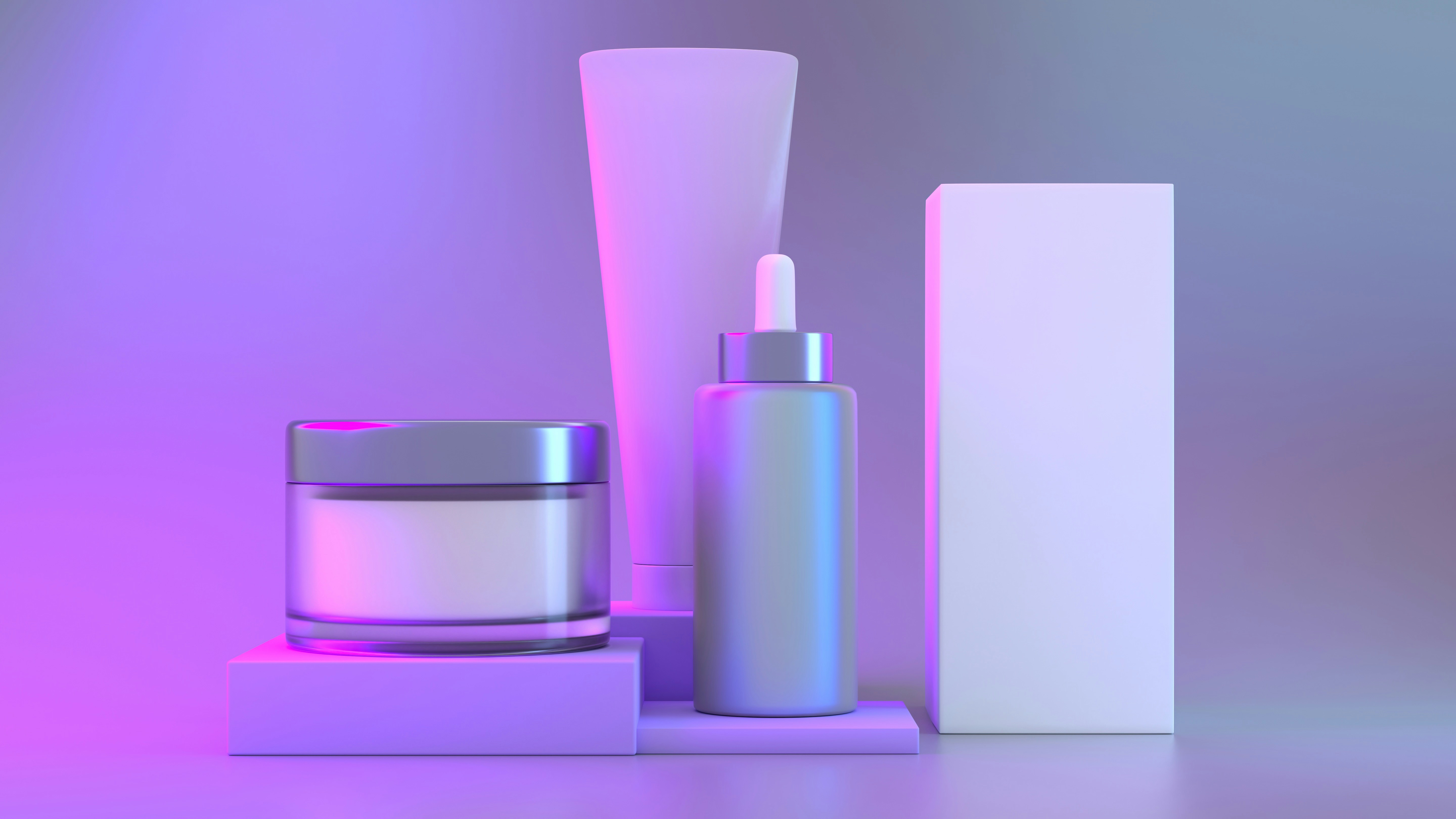
We believe the CGI versus AI debate is a false one, and that it does a disservice to brands trying to understand how to optimise their visual production. These two technologies are not in competition because they do not operate in the same register. CGI is a production tool: precise, controlled, reproducible. Generative AI is an exploration and acceleration tool for certain creative stages. Using them together intelligently is exactly what we do, and it is what allows us to be both faster in the upstream phases and more rigorous in the final deliverables.
What concerns us more is seeing brands seduced by the apparent speed of generative AI for uses that actually require the level of control only CGI can provide. The result, almost always, is an image that does not faithfully represent the product, an inconsistency in the range, or a visual that cannot be adapted. These are problems that cost more to fix than to avoid.
Do you have questions about what CGI can do for your brand?
Get in touch →